
ICSI-521: Discrete Math with Applications
Term: 2019 Spring
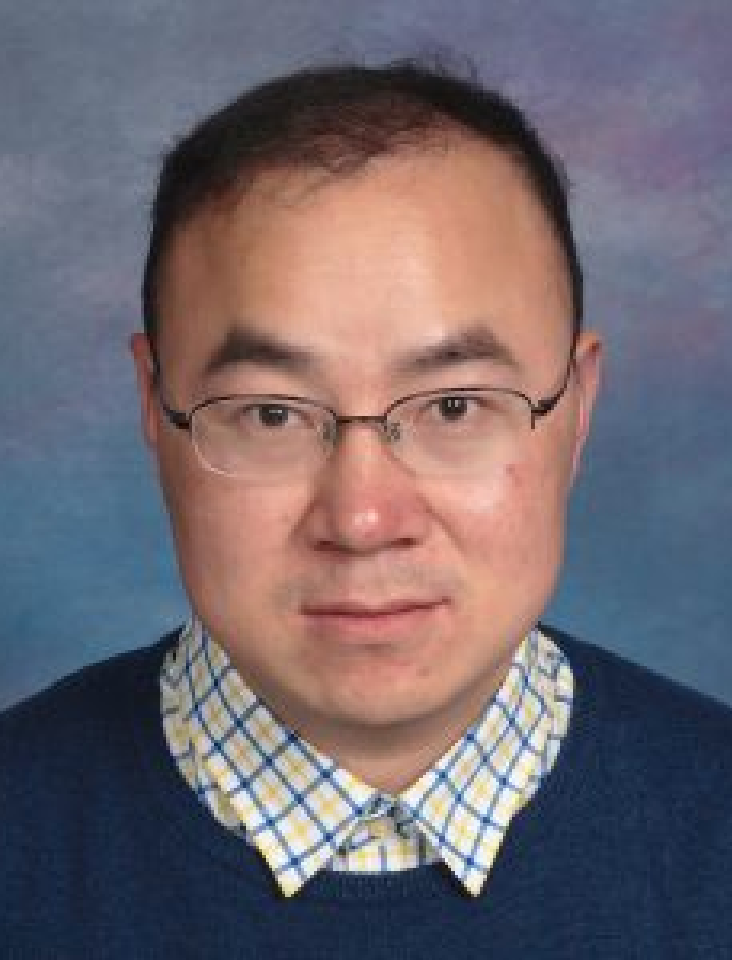
Instructor: Dr. Chengjiang Long
Email: clong2@albany.edu
Office Hour: Wed 12:45 PM – 3:45 PM at UAB 412E (by appointment)
Teaching Assistant: Oguz Aranay (oaranay@albany.edu) and Tuan N Tran (tran3@albany.edu)
Student Assistant: Shon Bangale (sbangale@albany.edu)
TA Office Hour: Wed 9:30 AM – 11:00 AM at UAB 401
Lecture Time: Thursday, 2:45 PM – 5:35 PM
Lecture Building/Room: Lecture Center 3B, University at Albany, SUNY
Course Website: www.chengjianglong.com/teaching_UAlbanyDM.html
Course Overview
The course is to introduce students to the techniques that may be used and enhanced later in professions related to Computer Science. Computer Science specialists could choose a career of developer, analyst, manager, etc. It is important for all of them to understand or to create formal (most often mathematical) description of the problem to be solved. This course covers a wide range of different aspects of discrete mathematics that are applicable to solving programming problems: proofs by induction; mathematical reasoning, propositions, predicates and quantifiers; sets; relations, graphs, and trees; functions; counting, permutations and combinations.
Prerequisites
Students should have a fundamental understanding of mathematical reasoning as well as be competent in solving applied algebra problems. The most important prerequisites are interest in the subject, willingness to dedicate necessary resources in terms of time and intellectual effort, and willingness to actively participate in the learning process. Programming skills are required to pass the course.
Text Books
Kenneth Rosen, Discrete Mathematics and Its Applications, 7th Edition, McGraw Hill, 2012.
Grading
The students will be graded based on course/discussion participation (5%), homework assignments (50%), one midterm exam (15%), one final project (30%).
Extra points: 20% for each homework. Note that this is optional, the purposes of this design is to encourage the self-motivated students to challenge themselves and give them more chances to get a higher score.
Attendance bonus: I would like to give the bonus to reward those students whose attendance is less than 3. For those who never miss any class, I will give them 5 extra points on the final grade. For those who miss only 1 class, I will give them 2 extra points. And for those who miss 2 classes, I will give them 1 extra point on the final grade.
Final grade: A(>=92), A-(>=90), B+(>=87), B(>=82), B-(>=80), C+(>=77), C(>=72), C-(>=70), D+(>=67), D(>=62), D-(>=60) and F(<60).
Late Submission Policy
Exponential penalty -- late for one day loses 25%, two days loses 50%, and so on and so forth.
Topics
- Introduction to Discrete Structures
- Logic Inference, Predicates, Qualifiers
- Boolean Algebra, Logic Gates, Logic Minimization
- Sets, Functions, Sequences, Sums, Matrices, Matrix Algebra
- Algorithms, Searching, Sorting, Complexity of Algorithms
- Number Theory, Cryptography, Modular Arithmetic
- Induction and Recursion
- Counting
- Relations
- Graphs
- Trees
Course Schedule
| Class | Date | Topic | Reading | Homework | Slides |
|---|---|---|---|---|---|
| 1 | 1/24/2019 | Introduction, Logic and Proofs | Ch 1 | Lecture_1 | |
| 2 | 1/31/2019 | Induction I and II | Ch 5 | Homework_1 | Lecture_2 |
| 3 | 2/7/2019 | Basic Structures: Sets, Function, Sequences etc. | Ch 2 | Lecture_3 | |
| 4 | 2/14/2019 | Algorithm, Growth Function and Complexity, and Integer Division | Ch 3 | Homework_2 | Lecture_4 |
| 5 | 2/21/2019 | Number Theory | Ch 4 | Lecture_5 | |
| 6 | 2/28/2019 | Cryptograph and Basics of Counting | Ch 6 | Homework_3 | Lecture_6 |
| 7 | 3/7/2019 | Counting | Ch 7 | Lecture_7 | |
| 8 | 3/14/2019 | Probability and Applications | Ch 7 | Homework_4 | Lecture_8 |
| 3/21/2019 | Class Suspended -- Spring Break | ||||
| 9 | 3/28/2019 | Advanced Counting Techniques | Ch 8 | Homework_5 | Lecture_9 |
| 10 | 4/4/2019 | Relations | Ch 9 | Lecture_10 | |
| 11 | 4/11/2019 | Midterm Exam | Ch 1-9 | Midterm_Exam | |
| 12 | 4/18/2019 | Graph Theory | Ch 10 | Lecture_11 | |
| 13 | 4/25/2019 | Trees | Ch 11 | Lecture_12 | |
| 14 | 5/2/2019 | Final Project Presentation | Lecture_13 |
Note: The above course schedule may be subject to change. Please do check the latest update.